
$19,000. They Settled at $500.
Everything was ready for closing when the buyers suddenly demanded thousands of dollars for flooring and cleaning. Here's how preparation, tough conversations, and strategic negotiation helped protect my seller at the finish line.
🚨 THE CLOSING-DAY SURPRISE
Imagine selling the home you've lived in for 13 years. You've already moved out, the inspections are complete, the financing is approved, and you're finally ready to close. Then, on the morning of closing, the buyer's attorney sends an email demanding thousands of dollars for alleged hardwood floor damage and odor remediation.
That's exactly what happened to one of my clients.
The buyers had completed their final walkthrough the day before, and their agent told me everything went well. No concerns. No issues. Then suddenly, we were facing a $7,000 escrow request for the floors and another $9,000 to $10,000 for professional cleaning and odor treatment.
My client was an older gentleman transitioning into independent living. He had limited mobility, and selling his longtime home had already required considerable planning, patience, and emotional support. The last thing he needed was a financial surprise at the finish line.
By the time my client's attorney and I finished negotiating, the buyers agreed to a $500 cleaning credit.
But getting there took more than one difficult conversation.
🏡 A HOME THAT NEEDED MORE THAN A FOR-SALE SIGN
My client owned a beautiful Georgian-style home that had undergone a major renovation before he purchased it. Unlike many traditional Georgians, this property had an open main floor connecting the living room, dining area, and kitchen. Natural light traveled throughout the space, and the home featured beautiful hardwood floors with intricate details and custom trim.
The property itself was in great condition. The challenge was how it presented.

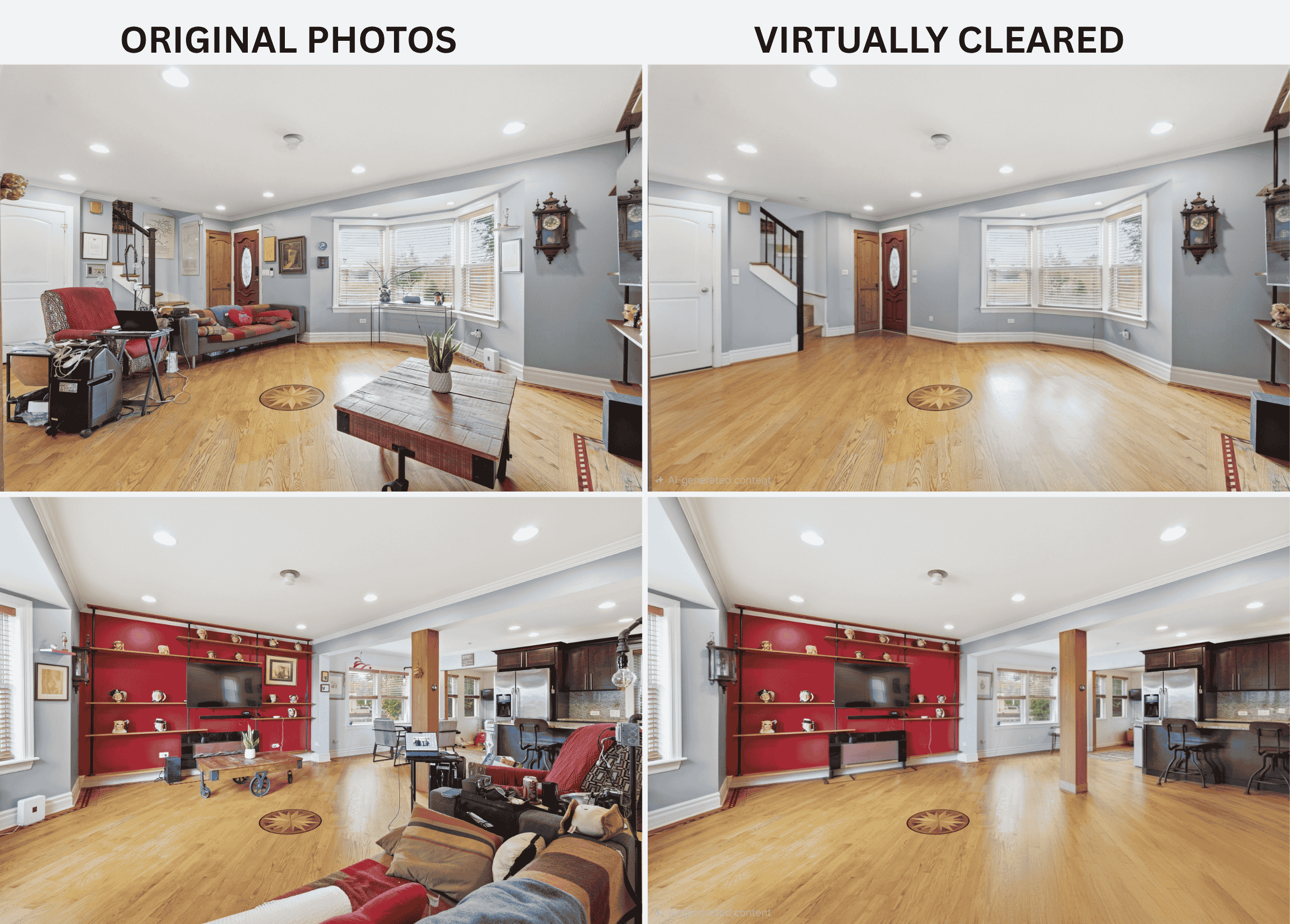
After 13 years, there were plenty of belongings throughout the home, and the furniture wasn't doing the space any favors. My client also tended to keep the shades closed, which meant buyers might not immediately appreciate the light and openness that made the property special.
Because of his limited mobility, he couldn't physically handle much of the preparation himself. So I hired a professional organizer, and I worked right alongside her. We packed belongings, cleared the main living space, and moved items into the garage.
Initially, my client was hesitant. And I understood why. This was his home, his belongings, and a major life transition. We had several conversations about what we were doing and why, and eventually he trusted me enough to let us transform the space.
The result was fantastic. The room could finally breathe, and buyers could appreciate the home's beautiful layout and architectural details.
For the listing photos, I also used virtual furniture removal to showcase the rooms without the existing furnishings. But I included the actual photos, too. I don't believe in making a home look completely different online than it does in person.
Good marketing should highlight a property's potential without misleading buyers.
That's how I approach my work. Sometimes making recommendations isn't enough. Sometimes you need to roll up your sleeves and help get things done.
🔥 FOUR OFFERS — AND WE DIDN'T CHOOSE THE HIGHEST
Our preparation and marketing helped generate four offers.
Two stood out: one at $25,000 over asking and another at $19,000 over asking.
You might assume we'd take the higher offer. But the $19,000-over-asking buyer included an appraisal gap provision, was putting 20% down with VA financing, and was willing to accommodate the approximately 60-day closing timeline my client needed.
That flexibility mattered. He was coordinating a move into independent living, not simply moving from one house to another.

After reviewing the risks and terms, my client chose the VA offer.
The highest offer isn't always the strongest offer. Price matters, but so do the terms and the likelihood of closing.
Before accepting, I'd also prepared him for possible VA appraisal requirements. VA financing can involve additional property-condition standards, and I wanted him to understand that certain repairs might be required.
Sure enough, the appraiser flagged peeling paint on the back deck and a small addition. We arranged the repairs, the appraiser returned, and the requirement was cleared.
Was it inconvenient? Absolutely. But my client wasn't blindsided because we'd already discussed the possibility.
That's something I value tremendously: preparing clients for challenges before they happen. I can't predict everything, but I can help them understand what might come next.
The buyers completed their inspection without requesting repairs or credits. Financing moved forward, my client moved into independent living, and we were ready to close.
Or so we thought.
📞 THE CONVERSATION THAT CHANGED EVERYTHING
The buyers completed their final walkthrough on Sunday, and their agent communicated that everything went well. Then, on Monday morning, the day we were scheduled to close, their attorney sent the emails.
First came the claim that the hardwood floors had significant damage previously hidden by furniture. Then came the odor complaint, with the buyers claiming they'd received a verbal estimate approaching $10,000 for professional cleaning and ozone treatment.
Now, buyers absolutely have the right to raise legitimate concerns. But the timing raised serious questions. These issues hadn't been raised during inspection, and their agent had just told me the walkthrough went well.
So I immediately called the buyer's agent.
My first question?
"Are they trying to kill the deal?"
I'm not afraid of difficult conversations. When something doesn't add up, I'd rather address it directly than dance around the issue. I wanted to understand whether the buyers were genuinely concerned, reconsidering the purchase, or trying to renegotiate at the last possible moment.
Meanwhile, my client's attorney and I were discussing our response. We knew my seller needed this transaction to close. He'd already moved, and starting over would have been incredibly stressful.
But understanding your client's circumstances doesn't mean revealing every vulnerability to the other side.
We weren't going to negotiate from a position of desperation.

And when it came to the hardwood floors, I had a particularly strong response.
Remember those beautiful floors I mentioned earlier? I'd personally helped remove carpeting and clear the space so they were visible. The wear the buyers pointed to was consistent with what was already visible in other high-traffic areas. We weren't hiding anything.
So we rejected the $7,000 flooring request.
We also pushed back on the odor-remediation demand. A last-minute verbal estimate approaching $10,000 wasn't something we were simply going to accept without scrutiny.
My client's attorney and I aligned on our position and pushed back firmly.
And then something interesting happened.
The buyers came back requesting $500 for professional cleaning.
Could we have continued fighting over that $500? Absolutely. But good negotiation isn't about winning every argument. It's about knowing when to stand firm and when a reasonable compromise serves your client's interests.
We had already rejected the overwhelming majority of their demands. Agreeing to the $500 credit allowed my client to move forward without unnecessary additional stress or risk.
So we agreed. And we closed.
❤️ MORE THAN A TRANSACTION
When everything was finished, my client was incredibly appreciative of the work we'd done. And what meant the most wasn't just successfully pushing back against the last-minute demands. It was how grateful he was for the support he'd received throughout the process.
There had been plenty of calls, texts, and long conversations. Sometimes he needed guidance about the transaction. Other times, he simply needed reassurance while navigating a major life change.
And I was happy to provide that.
Because real estate isn't just about getting the best price or closing quickly. It's about understanding what a client is going through and adjusting your level of service to meet their needs.
Sometimes that means physically helping prepare a home. Sometimes it means anticipating financing challenges. And sometimes it means having an uncomfortable conversation to protect thousands of dollars.
I can be patient and compassionate with my clients while also being firm and direct when it's time to protect their interests. Those two things go hand in hand.
💡 WHAT YOU CAN TAKE FROM THIS STORY
There are a few lessons here for anyone preparing to sell a home.
Presentation matters. Buyers need to see a property's potential, and sometimes that requires more than professional photography.
The highest offer isn't always the best offer. Financing, appraisal protections, contingencies, and closing flexibility can be just as important as price.
Preparation creates confidence. We anticipated possible VA appraisal requirements before accepting the offer, helping my client navigate the peeling-paint issue without unnecessary panic.
And finally, the transaction isn't over until it's closed. Even when inspections are complete and financing is approved, unexpected challenges can arise. That's when experience, judgment, and the willingness to have difficult conversations make a difference.
In the end, my client sold his longtime home, moved into his next chapter, and felt supported throughout the process.
And those last-minute demands?
They settled at $500.
That's the whole story.
👉 Thinking of selling, buying, or investing? Let's talk strategy.
📞 Or reach out directly at 312.880.9409
